8 in 10 airline passengers surveyed in India confirm experiencing various dark patterns; Bait & Switch, Forced Action & Drip Pricing are rampant
- ● Forced Action, Confirm Shaming and Bait & Switch reported on Indigo while Drip Pricing is used by Air India, Spicejet and Akasa
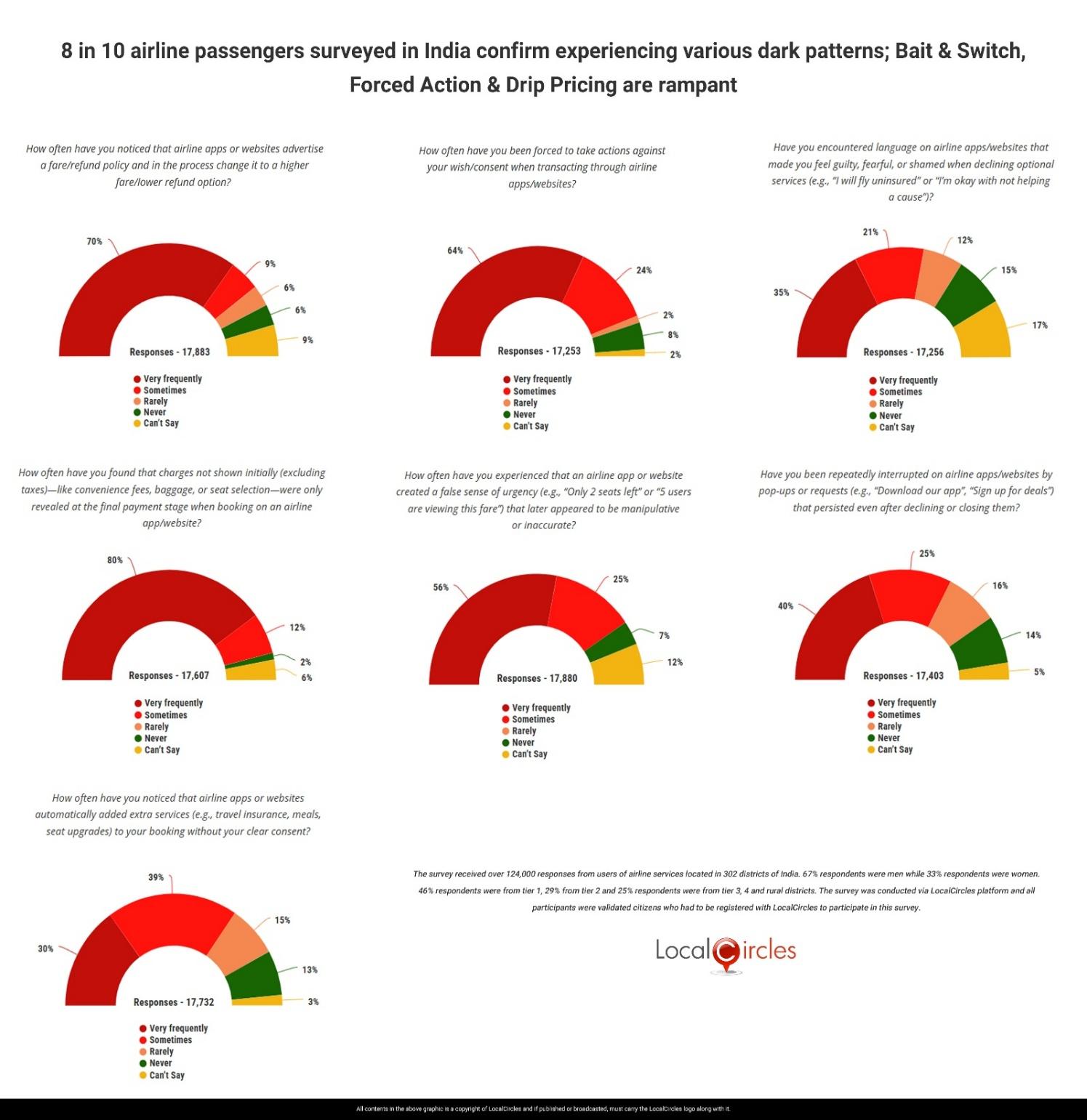
December 11, 2025, New Delhi: Airlines in India continue to uitlise dark patterns in their website and app interfaces to deceive passengers or impose hidden charges, the latest nationwide study by LocalCircles has found. The study which received over 124,000 responses from users of airline websites and apps and located across 302 districts of India found that processes like ticket booking, seat assignment, purchase of add on services like insurance and most of all, cancellation and refunds are ridden with dark patterns.
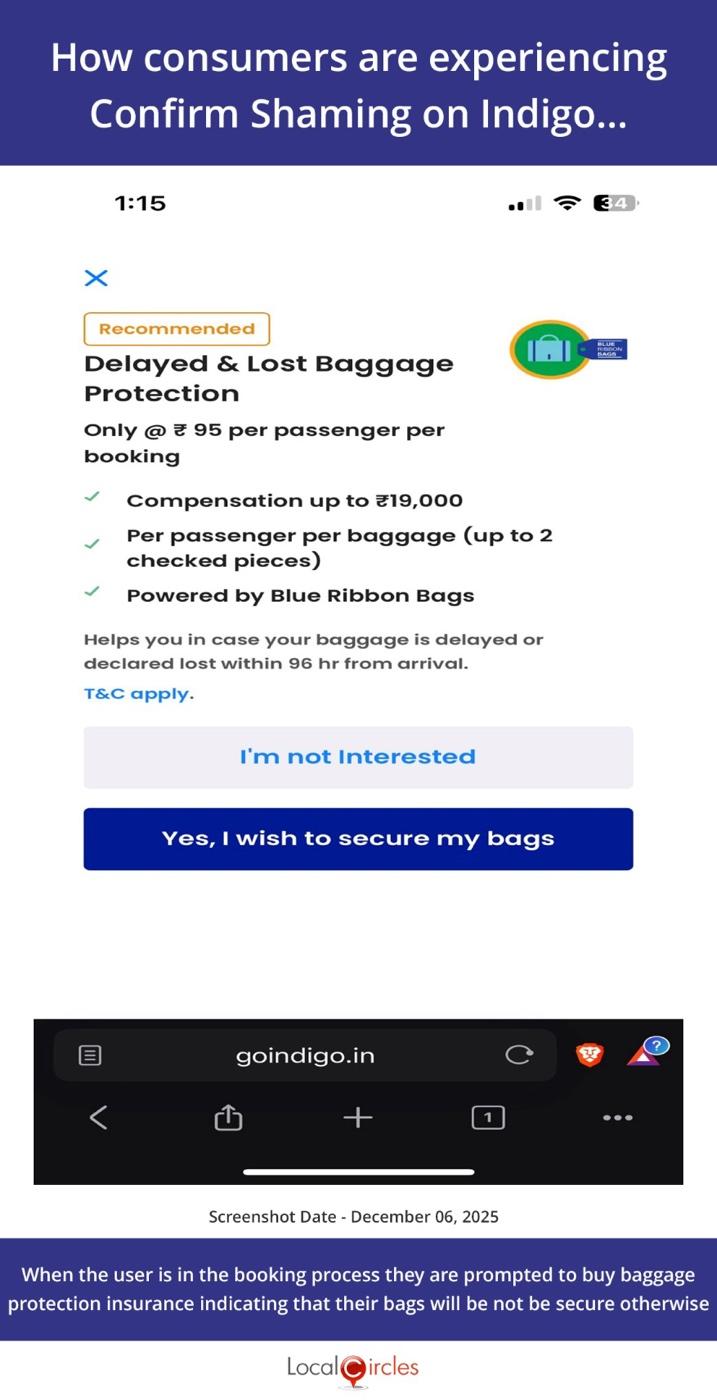
Dark Patterns are design or user interface tactics deliberately created to manipulate or deceive users into making decisions that may not be in their best interest, for example, an airline that claims full refund on ticket cancellation disabling the ticket cancellation tab forcing the user to hold their ticket or accept a lower refund. Similarly, during the ticket booking process in an attempt to sell insurance displaying a message that says “I will stay unsecured” which a user must click on if they choose to not add travel or baggage insurance to their cart.
In 2023, under Section 18 (2) (l) of the Consumer Protection Act of 2019, (CPA) the Department of Consumer Affairs of the Ministry of Consumer Affairs, Food and Public Distribution notified the draft Guidelines for Prevention and Regulation of Dark Patterns, 2023. Though the CCPA has issued a few notices to airlines in 2023 on lack of transparent communication on seat assignment and usage of confirm shaming dark pattern in the insurance section of ticket booking, the resolution by airlines has been limited, according to the consumers.
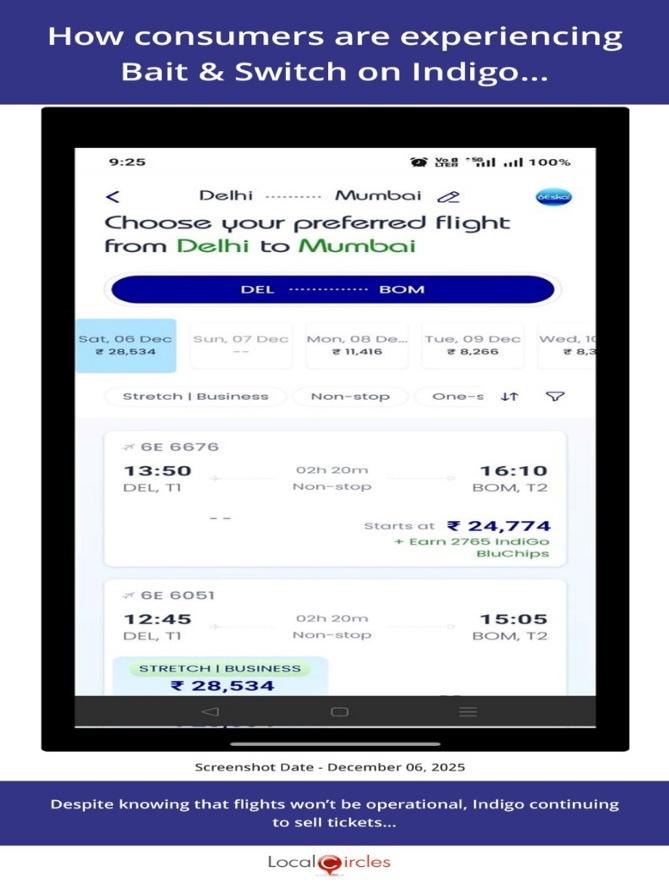
Last week, as Indigo faced major disruption across India, followed by cancellation of over 5000 flights over a week and promised hassle free cancellations and refunds, the dark pattern complaints on LocalCircles and other social media platforms experienced a massive jump. Consumers reported that they experienced all kinds of charges being deducted when they attempted to cancel a ticket directly or via various travel aggregators. In one example, a ticket price of INR 39,180 paid by the user who attempted to cancel was being given a refund of INR 1788 despite Indigo promising full return there by classifying it as a Bait & Switch dark pattern. The Bait here is clearly the full refund promise given to calm the angry passengers followed by switching it to a different outcome which is favorable to the platform. Similarly, tickets were being still sold by Indigo to consumers for flights it knew are not likely to be operational.
LocalCircles through a survey has strived to find out how and which dark patterns are used by airlines through apps/ websites to manoeuvre fliers while booking tickets. The survey received over 124,000 responses from users of airline services located in 302 districts of India. 67% respondents were men while 33% respondents were women. 46% respondents were from tier 1, 29% from tier 2 and 25% respondents were from tier 3, 4 and rural districts.
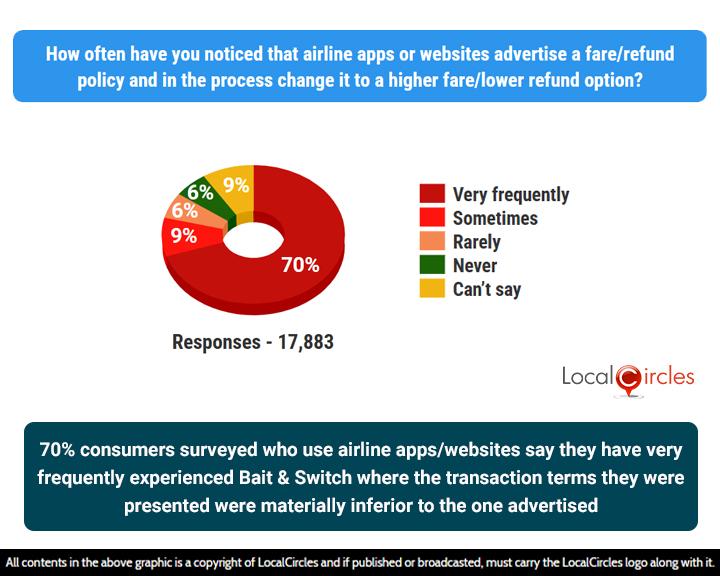
70% of consumers surveyed who use airline apps/websites say they have very frequently experienced Bait & Switch where the transaction terms they were presented were materially inferior to the one advertised
Bait-and-switch dark patterns in Indian airlines involve showing surprisingly low fares initially, only to significantly increase them or add mandatory, pricey extras (like insurance/seat fees) during checkout, tricking users into paying more. The survey asked consumers, “How often have you noticed that airline apps or websites advertise a fare/ refund policy and in the process chang it to a higher fare/ lower refund option?” Out of 17,883 who responded to the question 70% indicated that airline apps or websites “very frequently” engage in such tactics; 6% of respondents indicated “rarely” have they experienced it; 6% of respondents indicated that they have “never” noticed it and 9% of respondents did not give a clear answer. To sum up, 70% of consumers surveyed who use airline apps/websites say they have very frequently experienced Bait & Switch where the transaction terms they were presented were materially inferior to what was advertised.
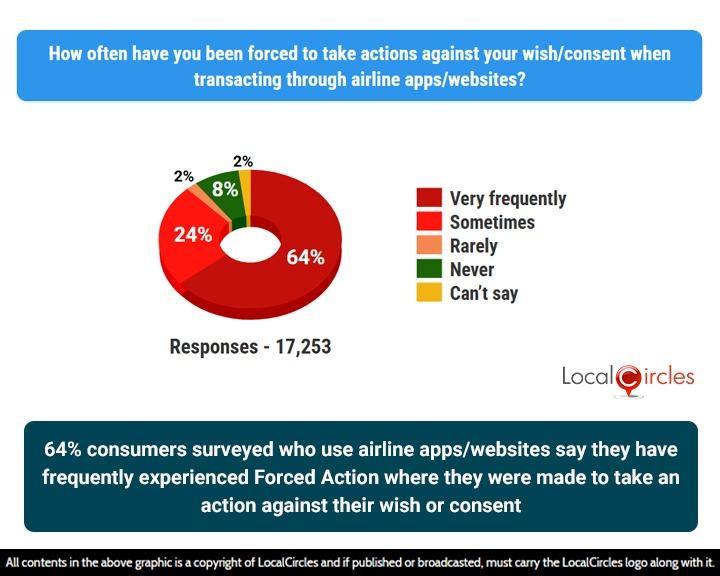
64% of consumers surveyed who use airline apps/websites say they have frequently experienced Forced Action where they were made to take an action against their wish or consent
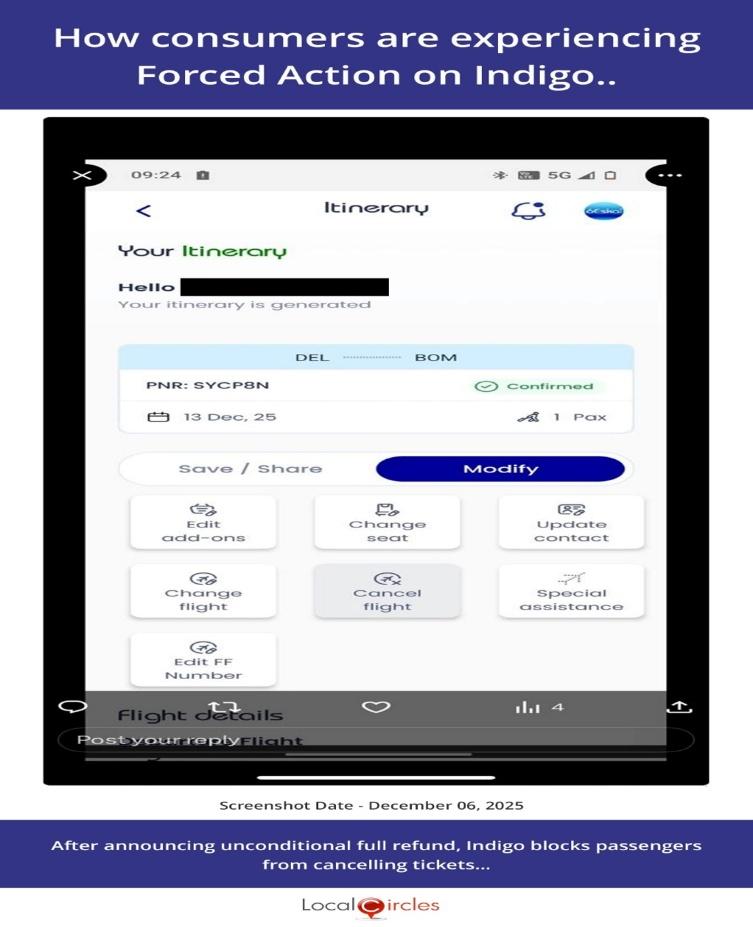
Indian airlines apps and websites often involve tricky designs making you buy extras (insurance, seats) or pay hidden fees, like SpiceJet's "risk my trip" prompts or MakeMyTrip's sneaky convenience charges, manipulating or forcing you into unintended purchases through fear or hidden costs, prompting the government to issue guidelines and develop apps like 'Jagriti' for reporting such deceptive UI designs in travel bookings. The survey asked consumers, “How often have you been forced to take action against your wish/ consent when transacting through airline apps/ websites?” Out of 17,253 who responded to the question 64% indicated they have “very frequently” been forced into taking action against their wish/ consent transacting through airline apps/ websites; 24% of respondents indicated “sometimes”; 2% of respondents indicated "rarely”; 8% of respondents stated “never” and 2% of respondents did not give a clear answer. To sum up, 64% of consumers surveyed who use airline apps/websites say they have frequently experienced Forced Action where they were made to take an action against their wish or consent.
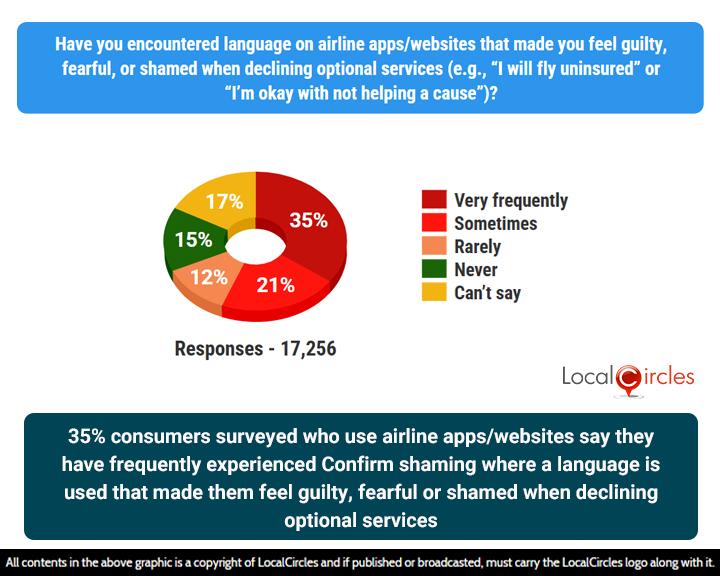
35% of consumers surveyed who use airline apps/websites say they have frequently experienced Confirm Shaming where a language is used that made them feel guilty, fearful or shamed when declining optional services
Indian airlines apps/ websites often coerce users into buying extras like insurance or paid seats using guilt-inducing phrases (e.g., "No, I will take risk"). The Central Consumer Protection Authority (CCPA) has intervened, forcing IndiGo to change its language to neutral terms ("No, I will not add to the trip"), confirming this is a recognized deceptive practice under Indian consumer law. The survey asked, “Have you encountered language on airline apps/ website that made you feel guilty, fearful or shamed when declining optional services (e.g., “I will fly uninsured” or “I’m okay with not helping a cause”)?” The question recevied 17,256 responses with 35% indicating “very frequently” they have been made to feel guilty; 21% of respondents indicated “sometimes”; 12% of respondents indicated “rarely” has this happened with them; 15% of respondents stated “never”; and 17% of respondents did not give a clear answer. To sum up, 35% of consumers surveyed who use airline apps/websites say they have frequently experienced Confirm shaming where a language is used that made them feel guilty, fearful or shamed when declining optional services.
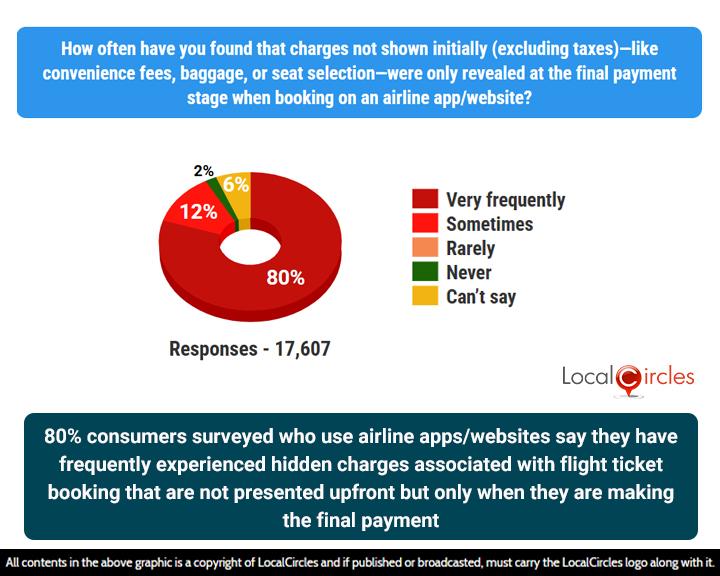
80% of consumers surveyed who use airline apps/websites say they have frequently experienced hidden charges associated with flight ticket booking that are not presented upfront but only when they are making the final payment
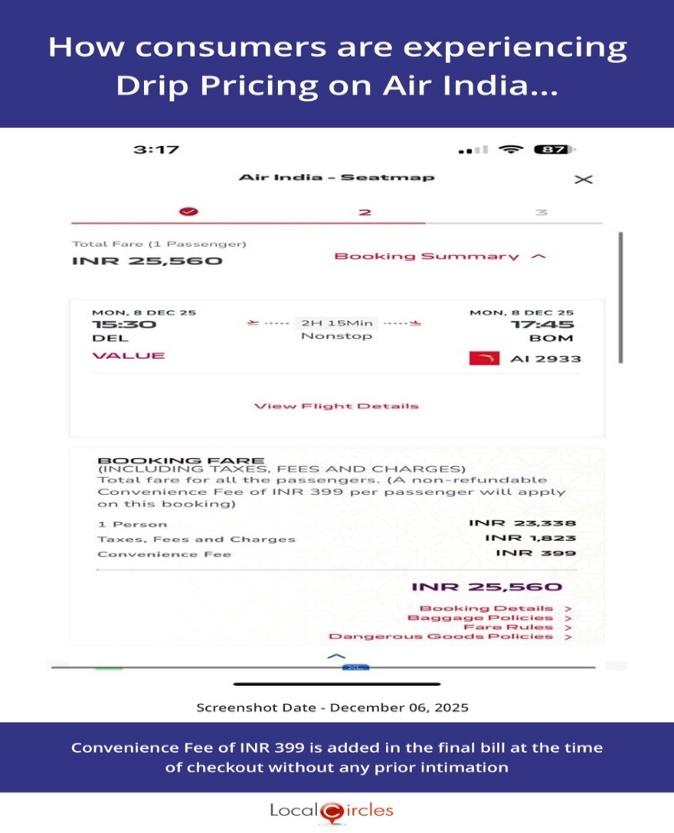
There have been instances of the CCPA fining companies using drip pricing, dark patterns where initial low fares hide mandatory extra charges (taxes, fees, insurance, etc.) that appear later in booking, misleading consumers into paying more. The survey asked consumers, “How often have you found that charges are not shown initially (excluding taxes) – like convenience fees, baggage, or seat selection- were only revealed at the final payment stage when booking on an airline app/ website?” Out of 17,607 who responded to the question 80% indicated that they have experienced hidden charges associated with flight tickets “very frequently”; 12% of respondents indicated that they have experienced it “sometimes”; 2% of respondents indicated that they have “never” experienced it and 6% of respondents did not give a clear answer. To sum up, 80% of consumers surveyed who use airline apps/websites say they have frequently experienced hidden charges associated with flight ticket booking that are not presented upfront but only when they are making the final payment.
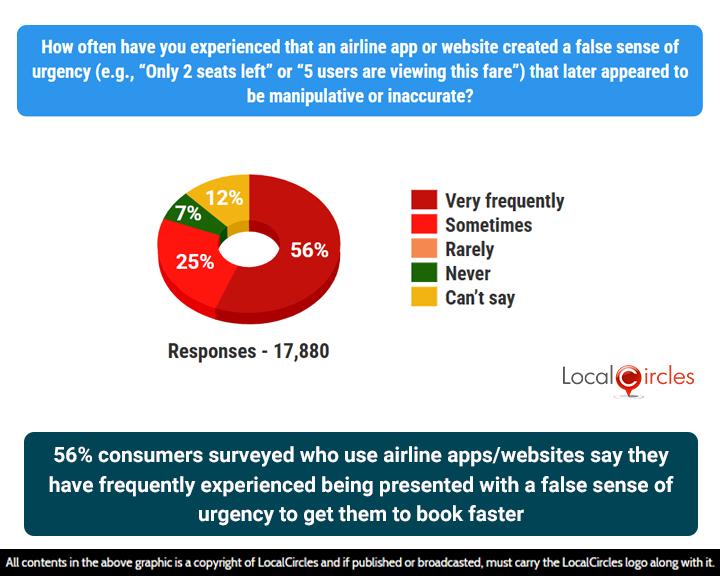
56% of consumers surveyed who use airline apps/websites say they have frequently experienced being presented with a false sense of urgency to get them to book faster
False Urgency dark patterns are a real issue, notably with IndiGo, where websites trick users into paying extra for seats by hiding free options or making them hard to find, pushing users to "buy" seats they don't need to. The survey asked consumers, “How often have you experienced that an airline app or website created a false sense of urgency (e.g., “Only 2 seats left” or “5 users are viewing this fare”) that later appeared to be manipulative or inaccurate?” Out of 17,880 who responded to the question 56% stated they have experienced this false sense of urgency “very frequently”; 25% of respondents stated they have experienced it “sometimes”; 7% of respondents stated they have “never” experienced it; and 12% of respondents did not give a clear answer. To sum up, 56% of consumers surveyed who use airline apps/websites say they have frequently experienced being presented with a false sense of urgency to get them to book faster.
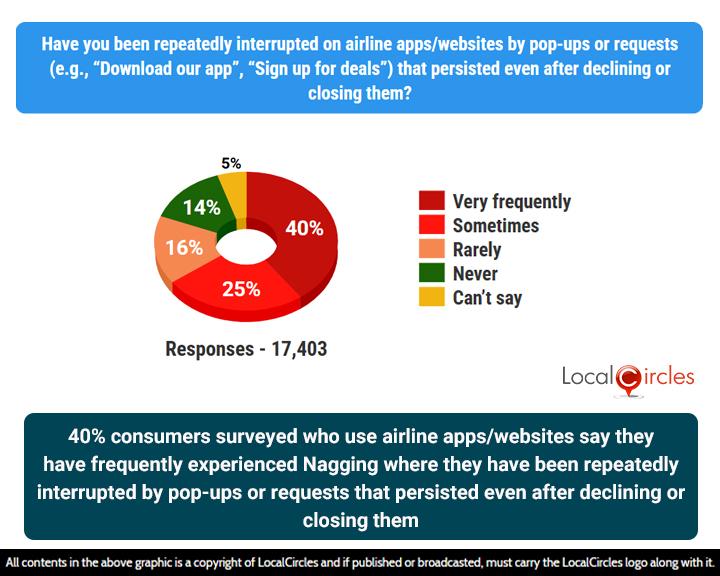
40% of consumers surveyed who use airline apps/websites say they have frequently experienced Nagging where they have been repeatedly interrupted by pop-ups or requests that persisted even after declining or closing them
It is quite common to be faced with promotions and advertisements, also known as nagging dark pattern, when using online platforms whether for shopping, social media or even reading on news portals. The survey asked consumers, “Have you been repeatedly interrupted on airline apps/ websites by pop-ups or requests (e.g. “Download our app”, “Sign up for deals”) that persisted even after declining or closing them?” The question received 17,403 responses. 40% of respondents stated they have experienced pop-ups or requests “very frequently”; 25% of respondents stated they have “sometimes” experienced it; 16% of respondents stated they have “rarely” faced such situations; 14% of respondents stated they have “never” faced any pop-ups / requests; and 5% of respondents did not give a clear answer. To sum up, 40% of consumers surveyed who use airline apps/websites say they have frequently experienced Nagging where they have been repeatedly interrupted by pop-ups or requests that persisted even after declining or closing them.
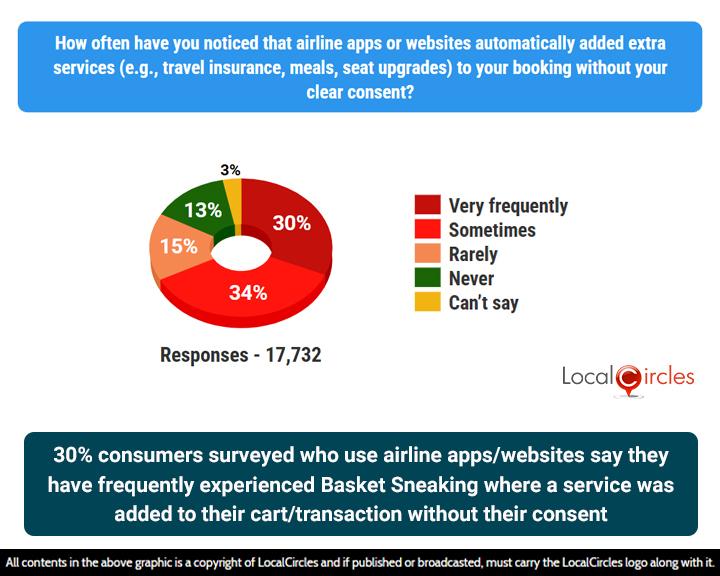
30% of consumers surveyed who use airline apps/websites say they have frequently experienced Basket Sneaking where a service was added to their cart/transaction without their consent
Seat upgrade, insurance, meals, etc., are some of the options airlines tend to slip into the booking that has impact on what a passenger pays for the final ticket cost. The survey asked consumers, “How often have you noticed that airline apps or websites automatically added extra service (e.g. travel insurance, meals, seat upgrades) to your booking without your clear consent?” Out of 17,732 who responded to the question 30% stated that they have experienced Basket Sneaking “very frequently”; 34% of respondents stated they have “sometimes” experienced it; 15% of respondents stated they have “rarely” noticed it; 13% of respondents stated they have “never” faced this dark pattern and 3% of respondents did not give a clear answer. To sum up, 30% of consumers surveyed who use airline apps/websites say they have frequently experienced Basket Sneaking where a service was added to their cart/transaction without their consent.
How dark patterns work on airline platforms:
Example of Bait & Switch
Example of Forced Action
Example of Confirm Shaming
Example of Drip Pricing
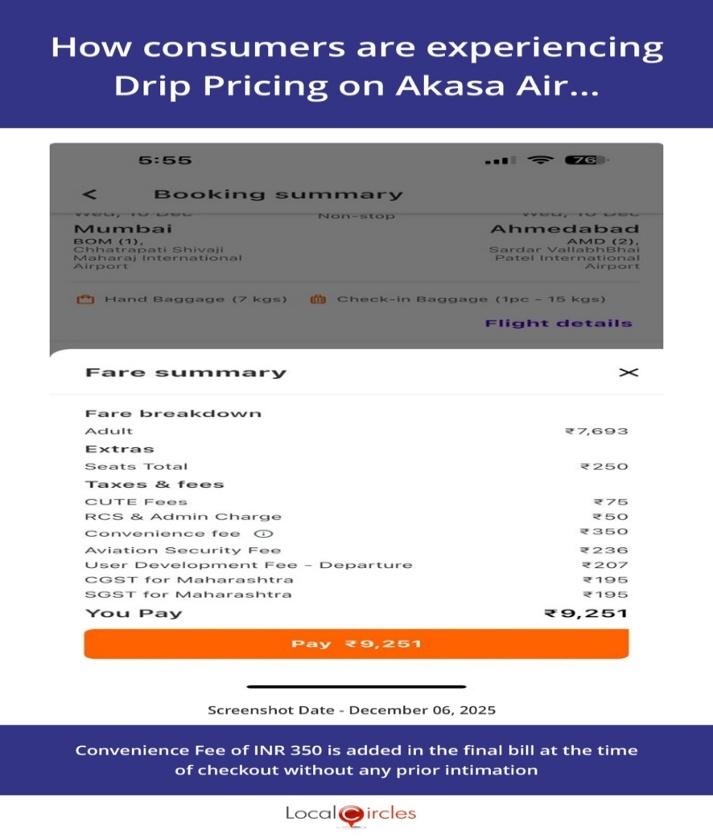
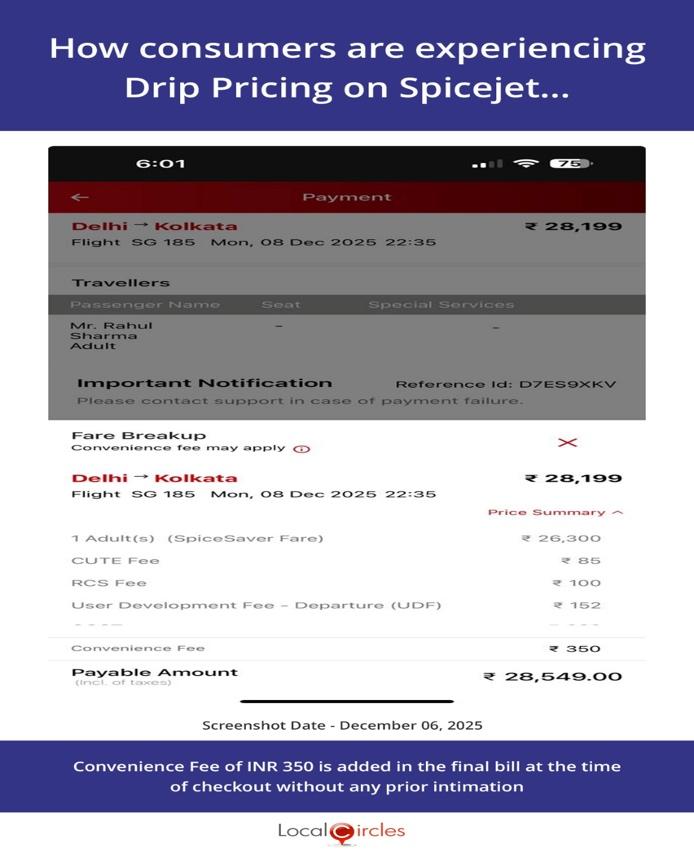
In summary, 70% of consumers surveyed who use airline apps/websites say they have very frequently experienced Bait & Switch where the transaction terms they were presented were materially inferior to the one advertised. The scenario is not much better where some of the other dark patterns are concerned. 80% of consumers surveyed who use airline apps/websites say they have frequently experienced hidden charges associated with flight ticket booking that are not presented upfront but only when they are making the final payment. What is more, 64% of consumers surveyed who use airline apps/websites say they have frequently experienced Forced Action where they were made to take an action against their wish or consent. Creating panic about missing a good deal is another tactic often used. 56% of consumers surveyed who use airline apps/websites say they have frequently experienced being presented with a false sense of urgency to get them to book faster. Another similar dark pattern is Nagging. 40% of consumers surveyed who use airline apps/websites say they have frequently experienced Nagging where they have been repeatedly interrupted by pop-ups or requests that persisted even after declining or closing them. Making people feel insecure is another tactic employed. 35% of consumers surveyed who use airline apps/websites say they have frequently experienced Confirm Shaming where a language is used that made them feel guilty, fearful or shamed when declining optional services like taking travel/ luggage insurance, etc. Another dark pattern is Basket Sneaking where services are added without consent to inflate the bill. 30% of consumers surveyed who use airline apps/websites say they have frequently experienced Basket Sneaking.
During the latest disruption, though Indigo announced that they were accepting unconditional cancellations and full refunds, but when users with a flight ticket attempted to cancel, they found that cancellation option was greyed out with only the option to modify their booking but not cancel it. Airlines, during COVID also deployed this practice where instead of letting consumers cancel their flights, they would be forced to opt for a different date in the future. The need of the hour is for CCPA to study these airline dark patterns in detail and get all the airlines to ensure compliance. The latest Indigo disruption has amplified the usage of dark patterns further and if no action is taken immediately, it will leave many more grieving consumers, with reduced trust in airlines and the regulators.
LocalCircles plans to share the study findings with DGCA and CCPA for their understanding and action.
Survey Demographics
The survey received over 124,000 responses from users of airline services located in 302 districts of India. 67% respondents were men while 33% respondents were women. 46% respondents were from tier 1, 29% from tier 2 and 25% respondents were from tier 3, 4 and rural districts. The survey was conducted via LocalCircles platform, and all participants were validated citizens who had to be registered with LocalCircles to participate in this survey.
About LocalCircles
LocalCircles, India’s leading Community Social Media platform enables citizens and small businesses to escalate issues for policy and enforcement interventions and enables Government to make policies that are citizen and small business centric. LocalCircles is also India’s # 1 pollster on issues of governance, public and consumer interest. More about LocalCircles can be found on https://www.localcircles.com
For more queries - media@localcircles.com, +91-8585909866
All content in this report is a copyright of LocalCircles. Any reproduction or redistribution of the graphics or the data therein requires the LocalCircles logo to be carried along with it. In case any violation is observed LocalCircles reserves the right to take legal action.
Enter your email & mobile number and we will send you the instructions.
Note - The email can sometime gets delivered to the spam folder, so the instruction will be send to your mobile as well


